


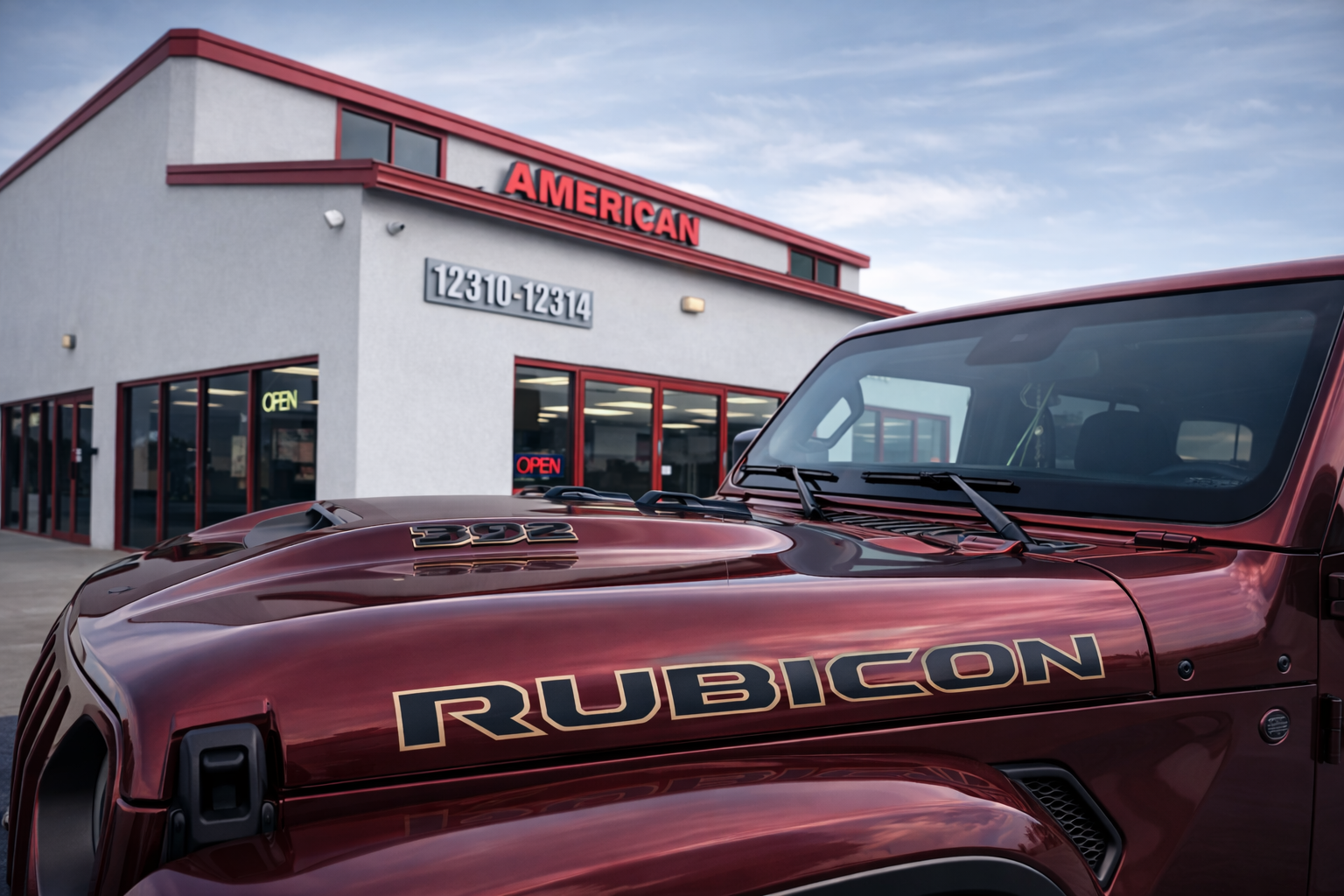
Window tinting is one of the most popular vehicle upgrades in the Kansas City area. It reduces heat, blocks UV rays, improves privacy, and gives your vehicle a sleek appearance. However, both Kansas and Missouri have specific laws regulating how dark your window tint can be, and the rules differ between the two states. Since American Fusion Wheels sits right on the Kansas-Missouri border in Shawnee, KS, we help customers navigate both sets of regulations every day.
Understanding Window Tint Measurements
Window tint darkness is measured by Visible Light Transmission (VLT) percentage. This number tells you how much visible light passes through the film. A higher VLT percentage means more light passes through and the tint appears lighter. A lower VLT percentage means less light gets through and the tint appears darker.
For example, 50% VLT allows half of the visible light through, while 20% VLT blocks 80% of visible light and appears significantly darker.
Kansas Window Tint Laws
Kansas enacted its window tint law in 1989. Here are the current legal limits for passenger vehicles:
Sedans and Cars
- Windshield: Non-reflective tint is allowed on the top AS-1 line (typically the top 5 to 6 inches). No full windshield tint is permitted.
- Front side windows: Must allow more than 35% VLT.
- Rear side windows: Must allow more than 35% VLT.
- Rear window: Must allow more than 35% VLT.
SUVs, Trucks, and Vans
- Windshield: Non-reflective tint is allowed on the top AS-1 line.
- Front side windows: Must allow more than 35% VLT.
- Rear side windows: Any darkness is permitted. You can go as dark as you want, including limo tint (5% VLT).
- Rear window: Any darkness is permitted.
Kansas Tint Reflectivity
Kansas does not allow tint that is more than 35% reflective on any window. This means highly mirrored or chrome-style tints are not legal in Kansas.
Missouri Window Tint Laws
Missouri enacted its window tint law in 1985. The rules are somewhat different from Kansas:
Sedans and Cars
- Windshield: Non-reflective tint is allowed on the top of the windshield above the AS-1 line or the top 5 inches, whichever comes first.
- Front side windows: Must allow more than 35% VLT. However, combined with factory tint, the total must still meet the 35% minimum.
- Rear side windows: Any darkness is permitted.
- Rear window: Any darkness is permitted.
SUVs, Trucks, and Vans
- Windshield: Non-reflective tint is allowed on the top of the windshield above the AS-1 line or the top 5 inches.
- Front side windows: Must allow more than 35% VLT.
- Rear side windows: Any darkness is permitted.
- Rear window: Any darkness is permitted.
Missouri Tint Reflectivity
Missouri law states that tint must not be more than 35% reflective, similar to Kansas. No mirror-finish tints are allowed.
Key Differences Between Kansas and Missouri
The most important difference for Kansas City metro drivers to understand:
- Rear side windows on sedans: In Kansas, rear side windows on sedans must be 35% VLT or lighter. In Missouri, sedans can have any darkness on rear side windows. If you live in Kansas and drive a sedan, you cannot legally go limo tint on the rear sides like Missouri residents can.
- Front side windows: Both states require 35% VLT on front side windows regardless of vehicle type. This is the one rule that is consistent across the border.
Medical Exemptions
Both Kansas and Missouri allow medical exemptions for darker window tint:
Kansas Medical Exemption
Kansas allows medical exemptions for individuals who have conditions that make them sensitive to light. You need a signed statement from a licensed physician specifying the medical necessity. The exemption paperwork should be kept in the vehicle at all times. Kansas does not specify a minimum VLT for medical exemptions, so darker tint may be approved based on your condition.
Missouri Medical Exemption
Missouri also allows medical exemptions. A prescription from a licensed optometrist or physician is required. The prescription must be carried in the vehicle. Missouri medical exemptions can allow tint as dark as 20% VLT on front side windows.
Penalties for Illegal Tint
Kansas Penalties
Illegal window tint in Kansas is a traffic infraction. Penalties include:
- Fines up to $60 for first offense
- Officers can pull you over specifically for tint violations
- You may be required to remove the illegal tint within a specified timeframe
- Repeated violations can result in higher fines
Missouri Penalties
In Missouri, illegal tint penalties are slightly steeper:
- Fines up to $75 for first offense
- Points may be added to your driving record in some jurisdictions
- Fix-it tickets are common, requiring you to bring your tint into compliance
What We Recommend
For Kansas City metro drivers who cross the state line regularly, we recommend staying compliant with the stricter of the two states to avoid any issues. Here is what most of our customers choose:
- Front side windows: 35% VLT ceramic tint for legal compliance and maximum heat rejection
- Rear side windows and rear window: 20% VLT for a sleek look with excellent privacy (legal on SUVs and trucks in both states, and on sedan rears in Missouri)
- Windshield: Clear ceramic film or tint strip on the top for UV and heat protection without visibility concerns
We always recommend ceramic tint film over standard dyed film. Ceramic tint blocks significantly more heat and UV radiation while maintaining better clarity, and it does not fade or turn purple over time like cheaper films.
At American Fusion Wheels, our window tinting team stays current on all Kansas and Missouri regulations. We will help you choose the right tint level for your vehicle type and your state of registration.
Call 913-291-2027 or visit our shop at 12310 W 62nd Ter, Shawnee KS.
Related Services at American Fusion Wheels
- 🔧 Tire Sales & Installation — 200+ brands, same-day mounting
- 🔧 Custom Wheels & Rims — 85+ brands, price match guarantee
- 🔧 Window Tinting — Premium ceramic & carbon films
Call (913) 291-2027 or visit us at 12310 W 62nd Ter, Shawnee KS 66216